New Hampshire

Last revised: 10/14/26 Rev. # 14
Keep watching, stay tuned, much more to come!
Publish date: 03/12/26

Click Here

Shipwrecks
SUNKEN TREASURE FOUND

A recovery operation of priceless historical artifacts with immense archeological value.


This is created for educational resources and informational viewing. This website will be constantly being revised.
Click Lobster For Past Revisions


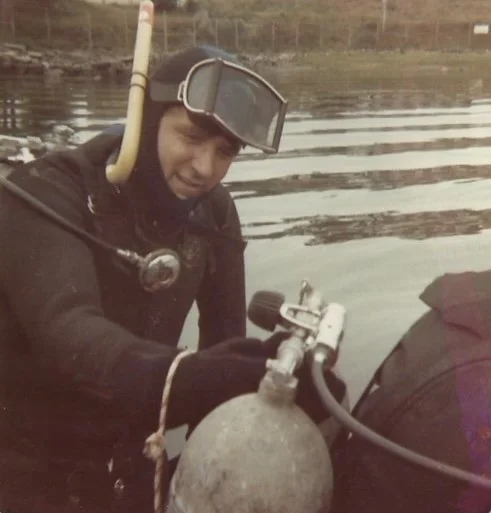
This website was created for family, friends, and colleagues to honor the remarkable achievements of Raymond and John Demers.
We proudly congratulate Ray and John on discovering three historic shipwrecks in the Piscataqua River in Portsmouth and New Castle, New Hampshire. Beginning in 1961, they devoted decades to locating, excavating, and studying these important archaeological sites and their artifacts.
All excavation work was conducted legally before the New Hampshire Abandoned Shipwrecks Act of 1987. Ray and Johns dedication made it possible for Dr. David Switzer to conduct his 1982 study by excavating approximately four feet of river sediment to expose the ship's ribs for examination.
Ray and johns work has made a lasting contribution to New Hampshire's maritime history, and the communities of Portsmouth and New Castle should be proud of this outstanding achievement.
Old NH maritime Law
Old New Hampshire State Law. Governed by the law of Finders Keepers and the Law of Finds
NH men discover 3 shipwrecks in New Hampshire before the 1987 Abandoned Shipwreck Act
Under old maritime law "finder's keepers" for abandoned shipwrecks is governed by the Law of Finds. This doctrine grants full ownership to the first person to discover and assert control over a genuinely abandoned vessel. However, proving a ship is truly "abandoned" is notoriously difficult. Maritime law's "finderskeepers" concept is governed by two main doctrines: the LAW OF FINDS and the law of Salvage. Under the Law OF FINDS, a discoverer can claim full ownership of an abandoned shipwreck, provided they prove the original owner explicitly relinquished title. Summary of "Finder'sKeeper's” under old maritime law "finder's keepers" for abandoned shipwrecks is governed by the Law of Finds. This doctrine grants full ownership to the first person to discover and assert control over a genuinely abandoned vessel.
Factor's courts consider when deciding claims. Evidence of abandonment by the original owner.
Degree of control and custodial acts by the finder Documentation preservation, notification.
John and Ray Demers/ Book, Videos, Newspaper Articles, ect
Immediately documented location, condition and recovery acts (GPS, photo.s logo)
Notified Flag state NH. NHDHS required by law.
Seeked legal counsel experienced in Amiralty, wreck and cultural property law.
Iven Hume/ Dort Bigg
WRECKS WERE IN PERIL.!!!
Evidence of abandoned property/ NH State building bridge on wreck site.
Wreck sites significantly compromised through moorings, lobster pots, anchors, and draggers.


The Abandoned shipwreck act of 1987
The Abandoned Shipwreck Act of 1987 (ASA)is a federal law asserting U.S. title to abandoned shipwrecks in state waters (within 3 nautical miles) and transferring that title to the state.
State Ownership: The U.S. claims abandonded shipwrecks embedded in state submerged lands or on the National Register and transfers title to the state.
Public Access & Use: Mandates states provide reasonable public access, protecting natural resources, habitat, and allowing recreational exploration (diving, fishing)
Jurisdiction: Removes admiralty law (salvage/finds) juirsdiction, requiring claims to be brought in state courts.
Specific Laws: Besides the ASA, New Hampshire has its own (e.g., NH Chapter 227-C) governing wrecks,requiring awareness for both.
Diver Responsibility: Divers must respect these laws, avoid artifact removal, report unathorized activity, and be aware of state regulations.
Clarity: Created a consistent framework for state management of historic wrecks, replacing complex federal admiralty law.
Preservation & Recreation: Aims to protect shipwrecks as historical resources and marine habitats while facilitating responsible public access.


Read all about it!
〰️
Read all about it! 〰️
“PORTSMOUTH, Oct 9 — Two Manchester divers have completed excavation of what is believed to be the oldest sunken ship discovered to date in New England waters.”
“Ray Demers found an ancient wreck earlier this year after following the chain of a sunken anchor. The remains of the vessel are located in the Piscataqua River here directly beneath the bridge connecting Sharpleigh and Goat Islands, and date from, about 1690, when the ship is believed to have gone down by fire. ”
PG 26 NEW Hampshire Sunday News Oct, 10 1976

The divers surmise the vessel sank in the Pool and then drifted to its present location after breaking free from its anchor chain broken by the tugging currents. It les in approximately 20 feet of water, leaning to one side and hugging the bank of Chapleich Island.
The bridge, first constructed of wood in 1822 and later or metal, broke up much of the ship and contents, but left the galley section fairly intact. It also helped preserve what was left of the wreck by preventing it from drifting apart, and by forming a catch-all which deposited a protective layer of underwater debris.
Demers excavated the remains by running a 200-foot firehose from their boat "Penny Ann" parallel to the bridge to the wreckage.
There the hose powered a waterblasting apparatus built by Demers which both blasts away the overburden of debris and then uses suction to remove and screen fine material.
They worked at least one full day per week during the summer in excavating the wreck, first going down together and later in shifts.
While digging at the site they contended with tremendous currents and two-to-three-foot visibility due to the shade from the bridge. "We could see the hooks coming down and fish being caught" by anglers above them," Demers said.
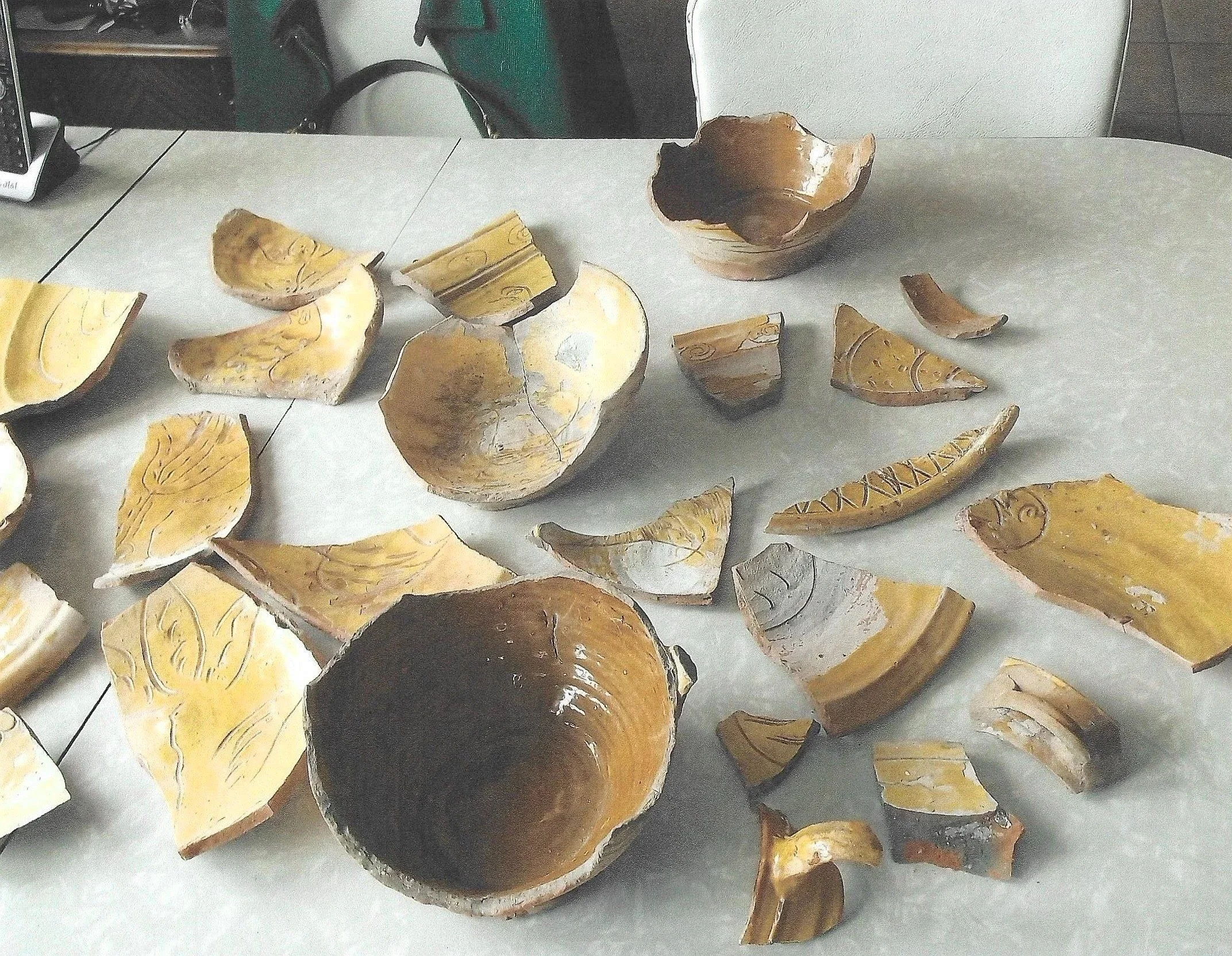
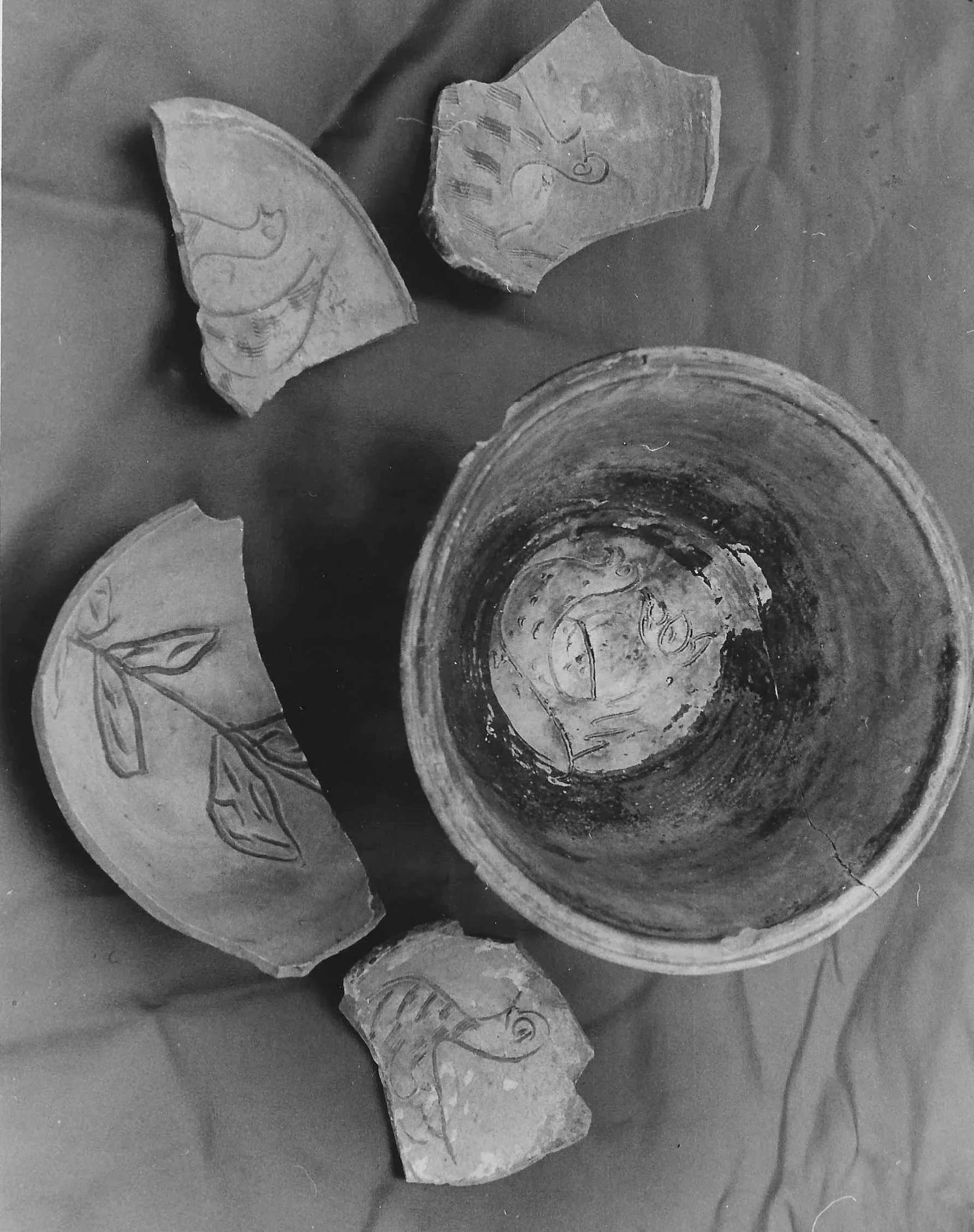
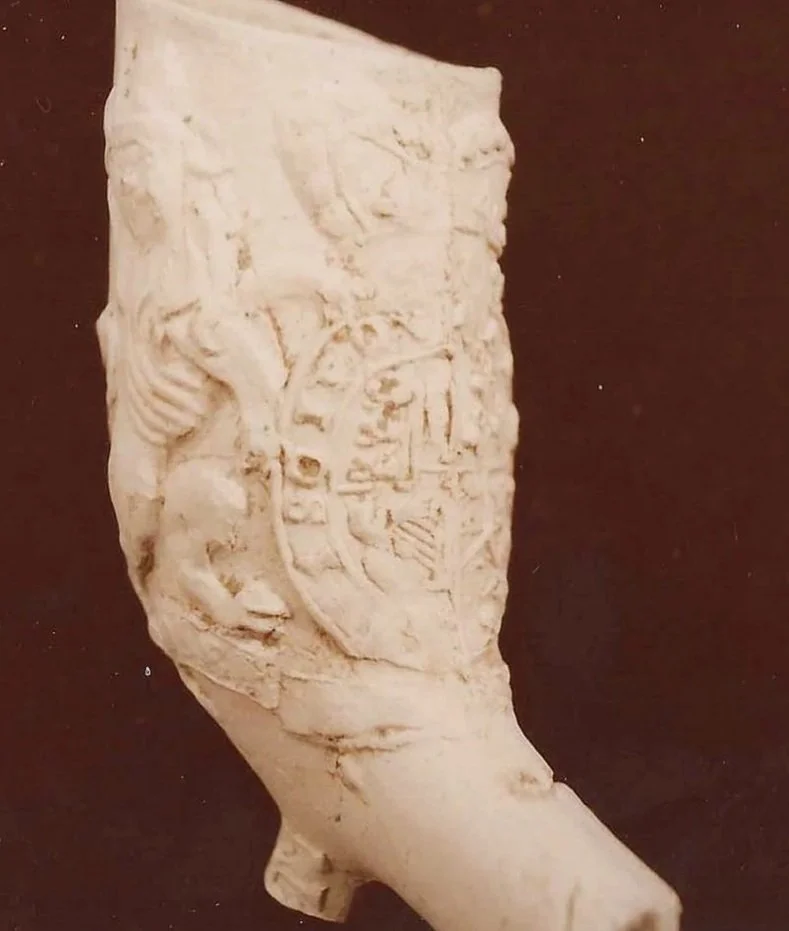
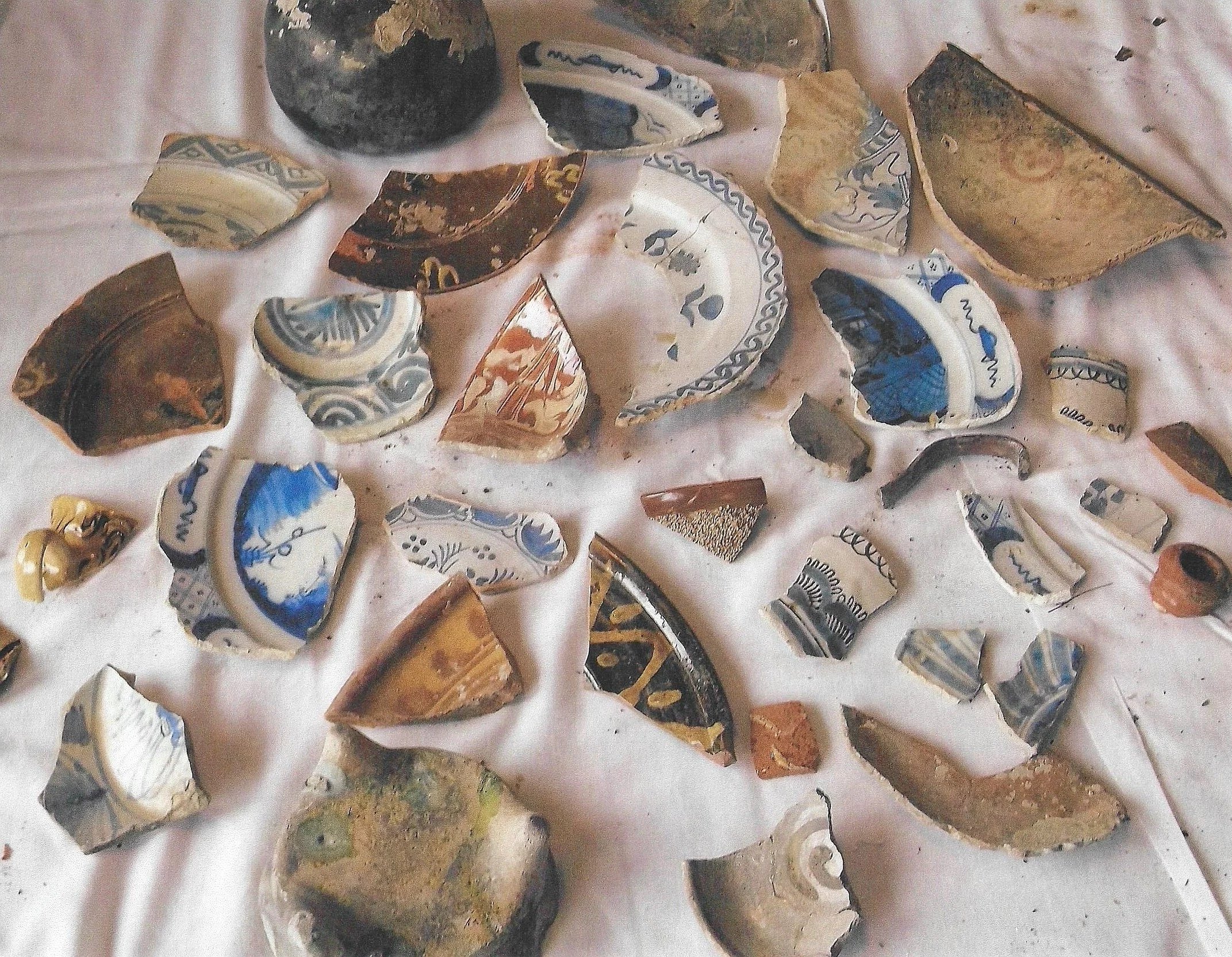
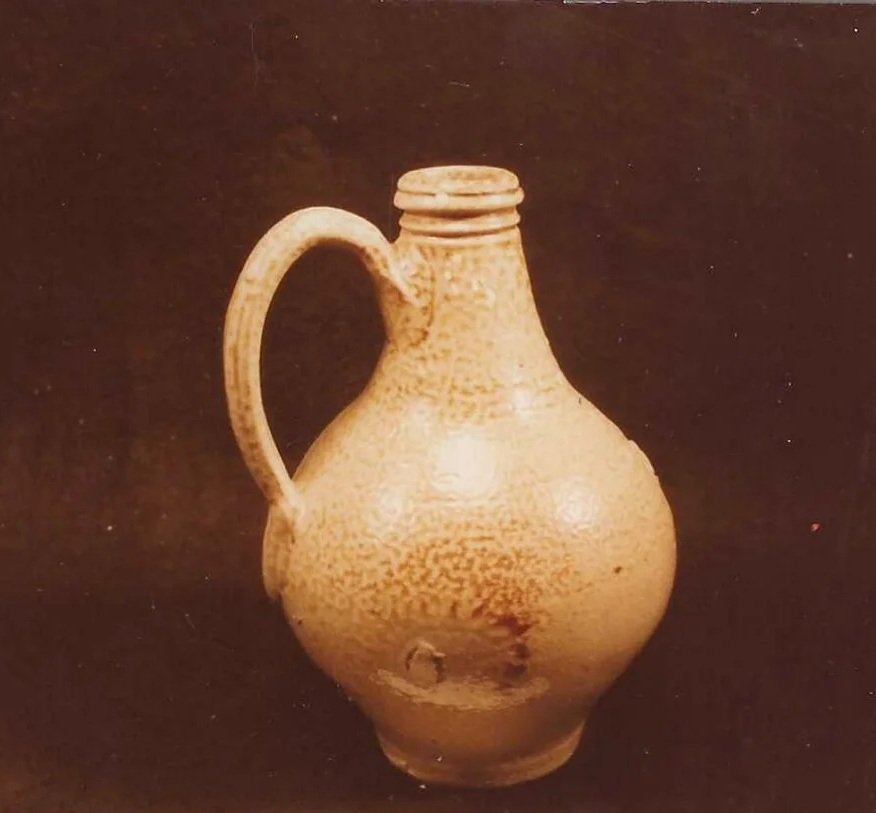
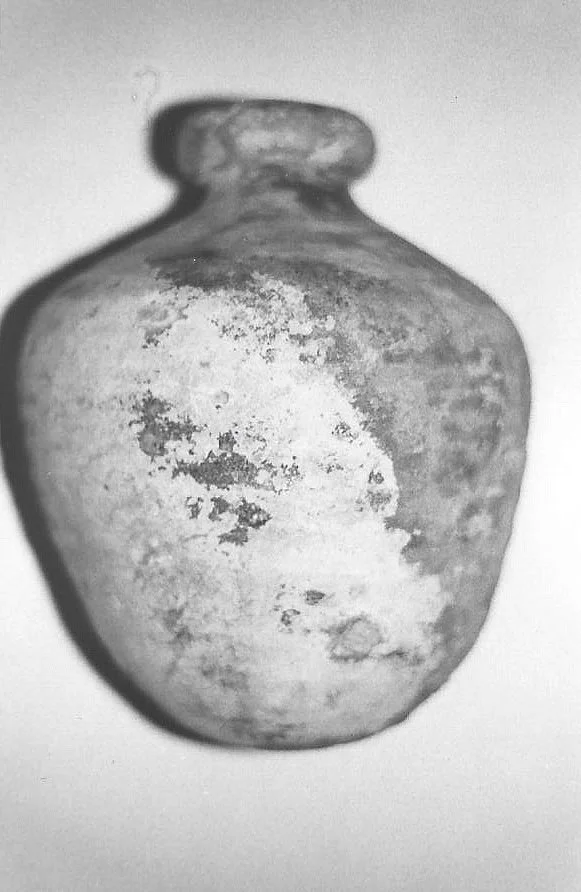
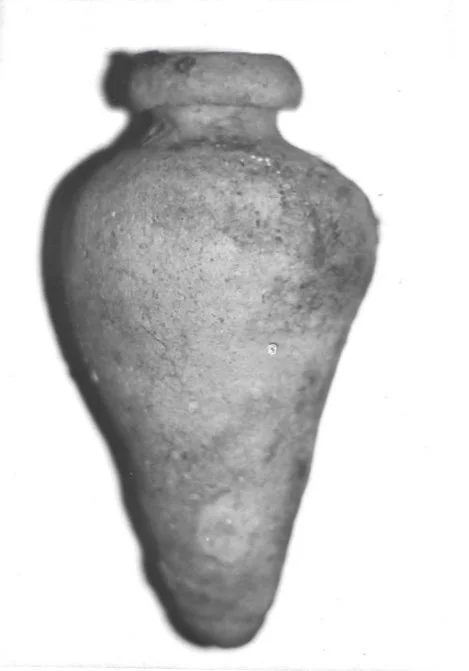
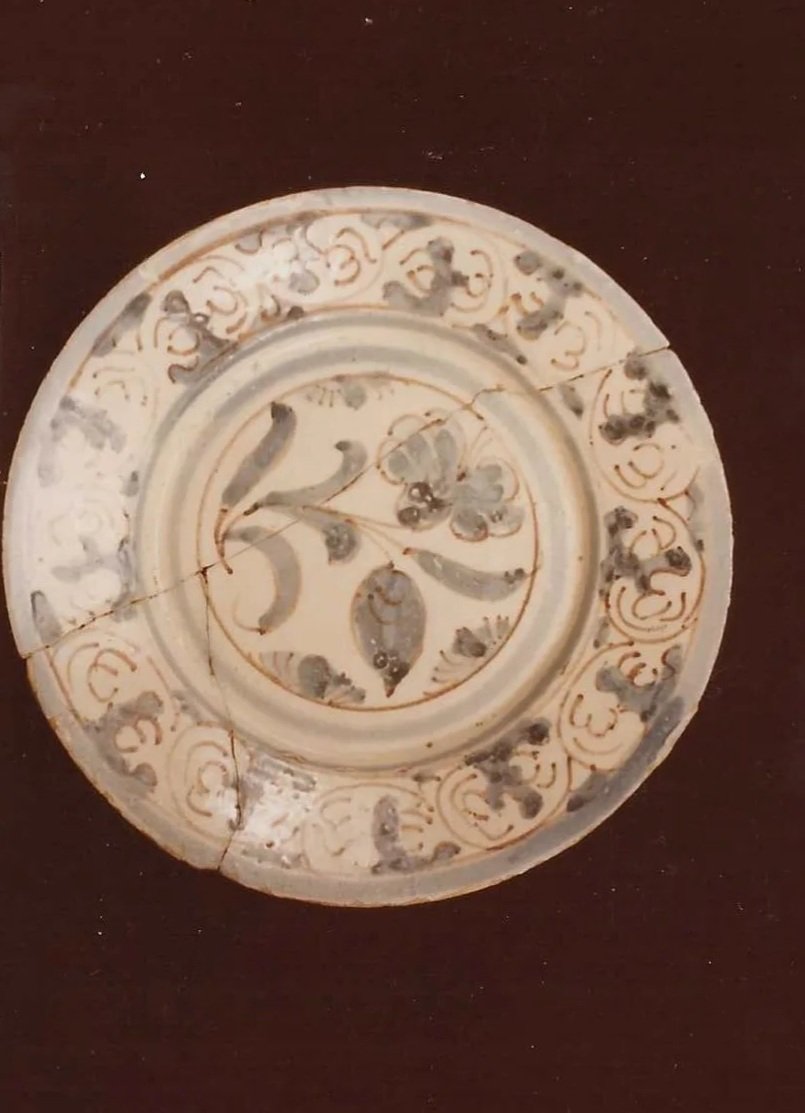
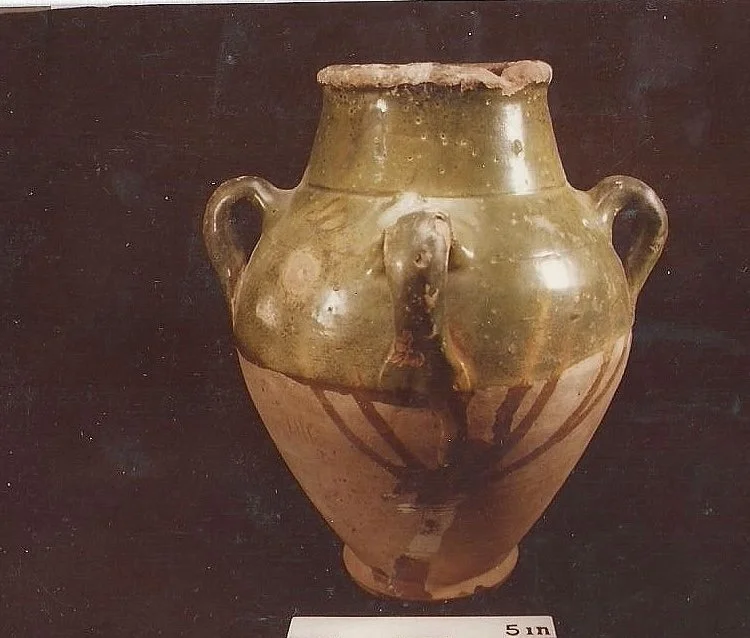
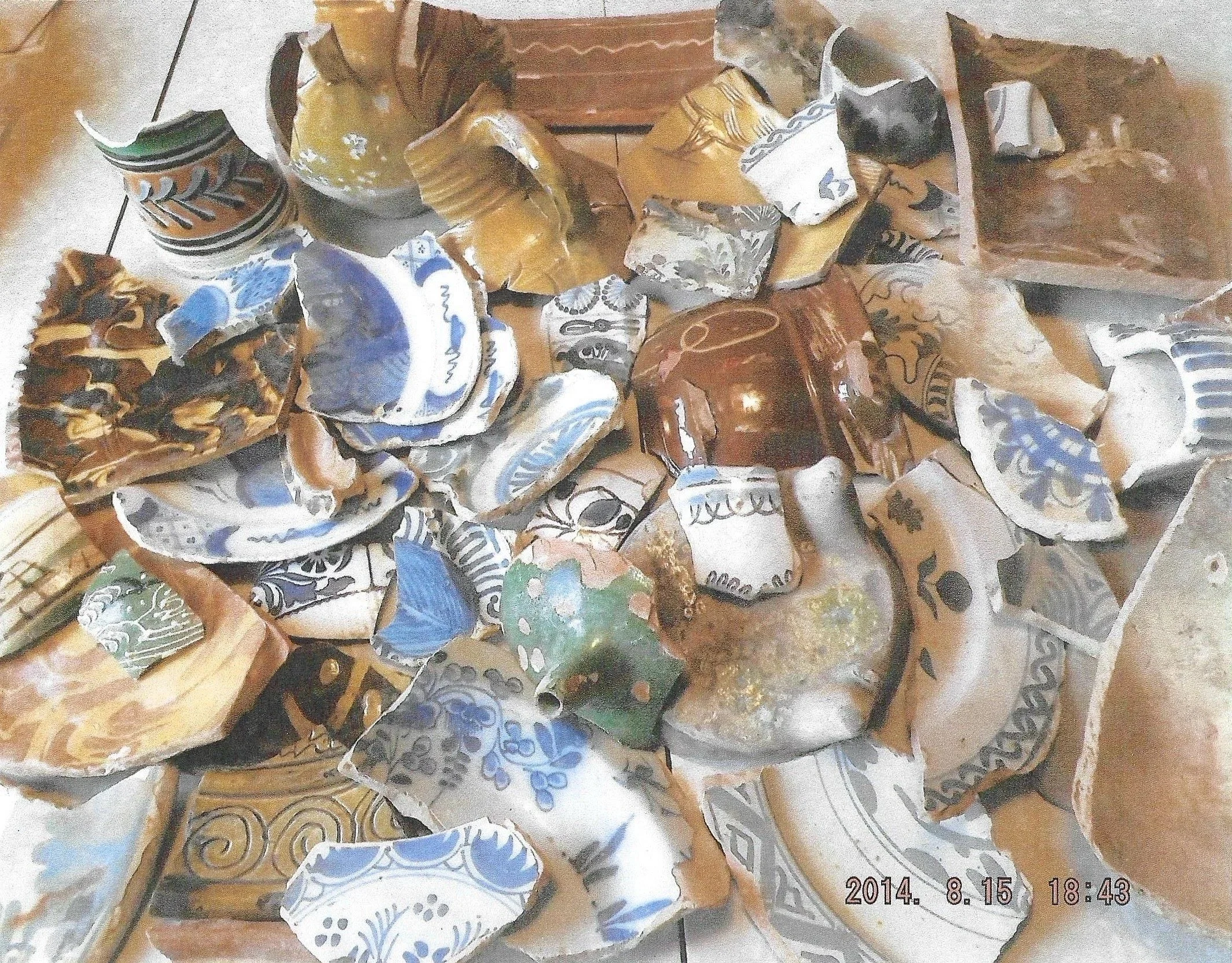
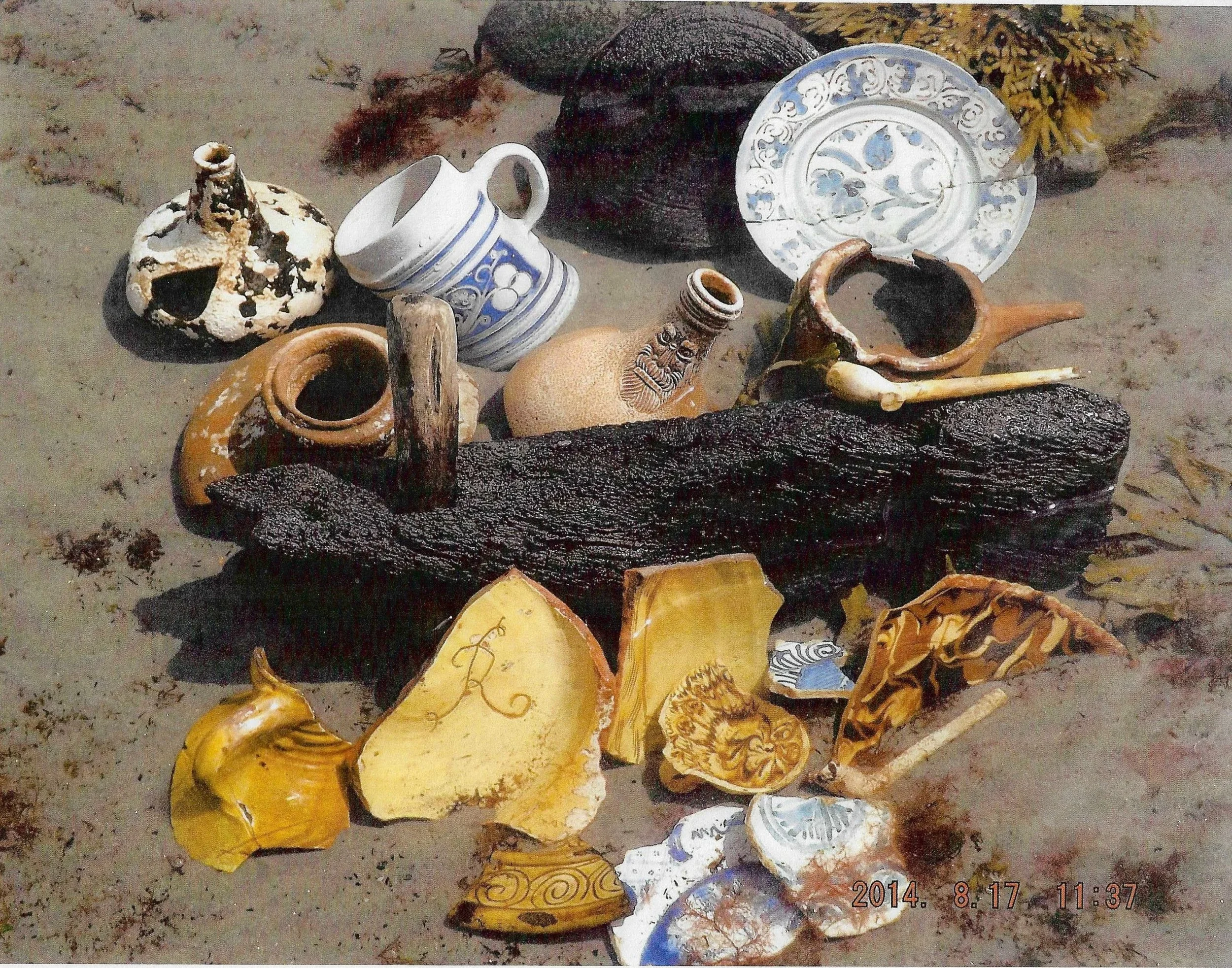
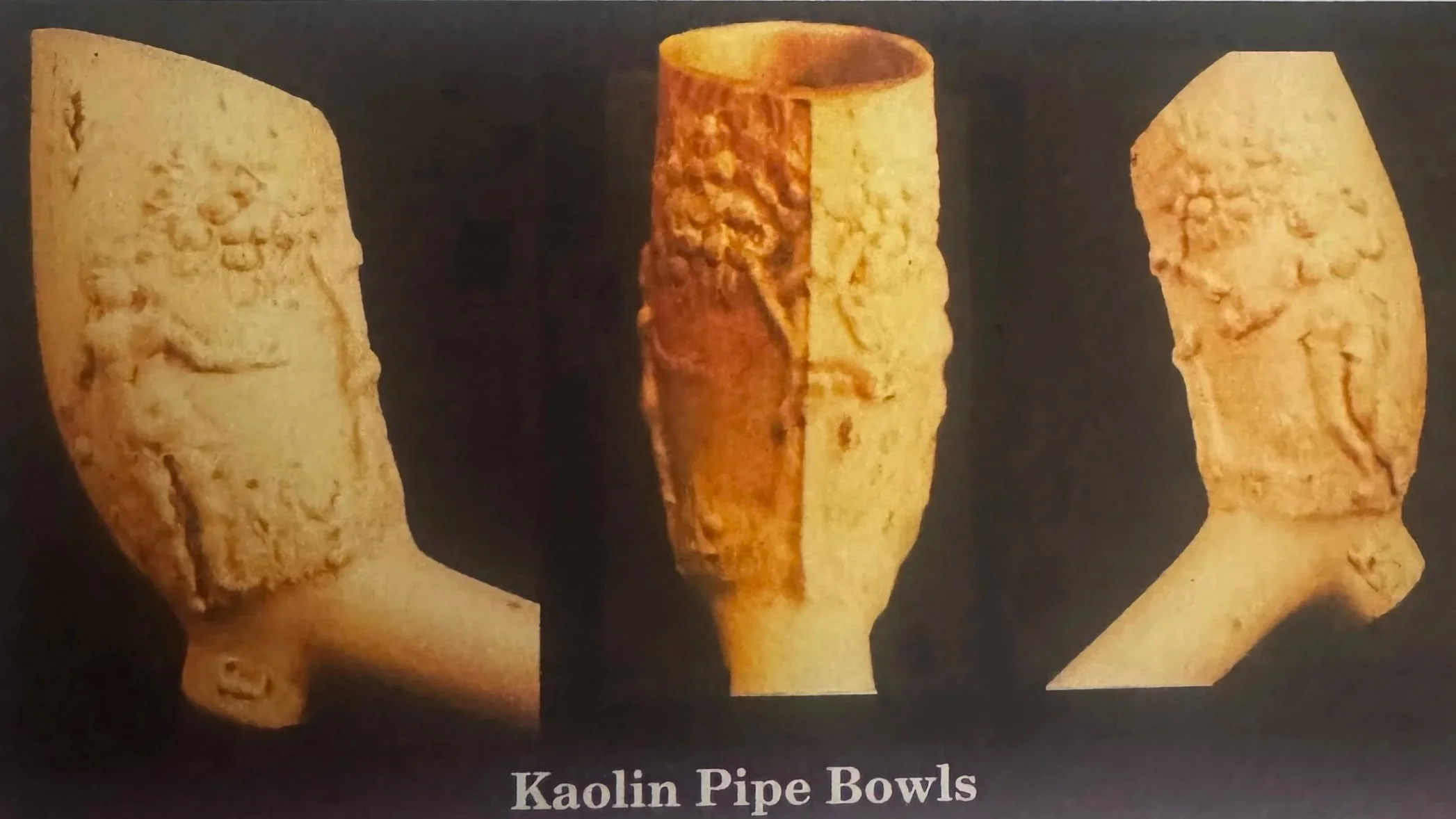
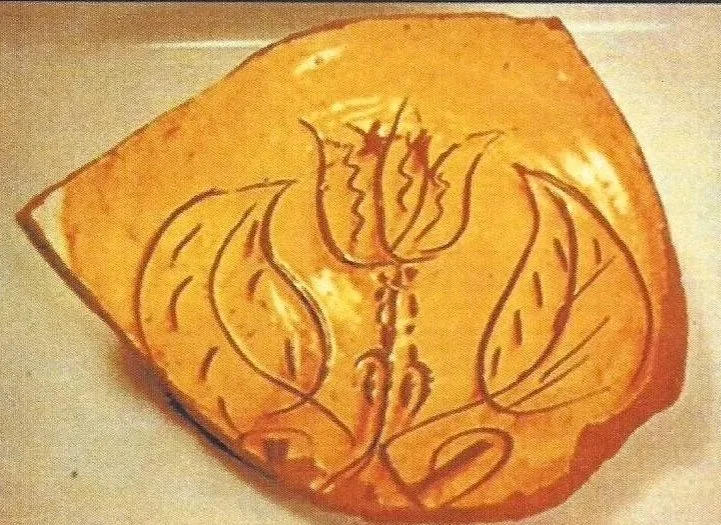
“The divers have as yet been unable to identify the wreck, but indications are it was a 50-foot. unarmed Dutch fishing or merchant vessel. No money was found, but Demers have brought up both broken and intact artifacts such as clay pipes, Mediterranean delftware and even skeletal remains of a wild pig that was kept on board ship.
”
"Word got around that the fishing was great whenever those 'workers' were under the bridge. As we excavated, we disturbed the sea worms, and it got so that the minute we arrived the fish would congregate around us," Demers said. They also accrued a collection of "every lead fishing weight possible,” while working below
Demers, member of the N.H. Archeological Society, brought up every piece from the wreckage he could find, from bits of wood to intact artifacts
"The most fascinating and important thing about a wreck is to get every single thing down there so they can later be studied," Demers said
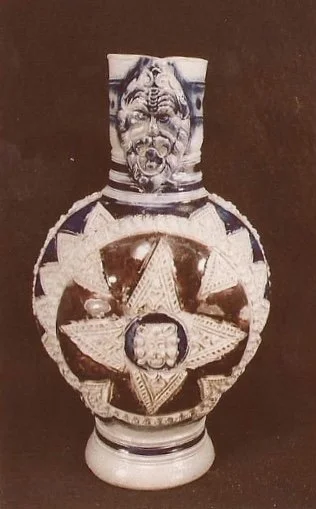
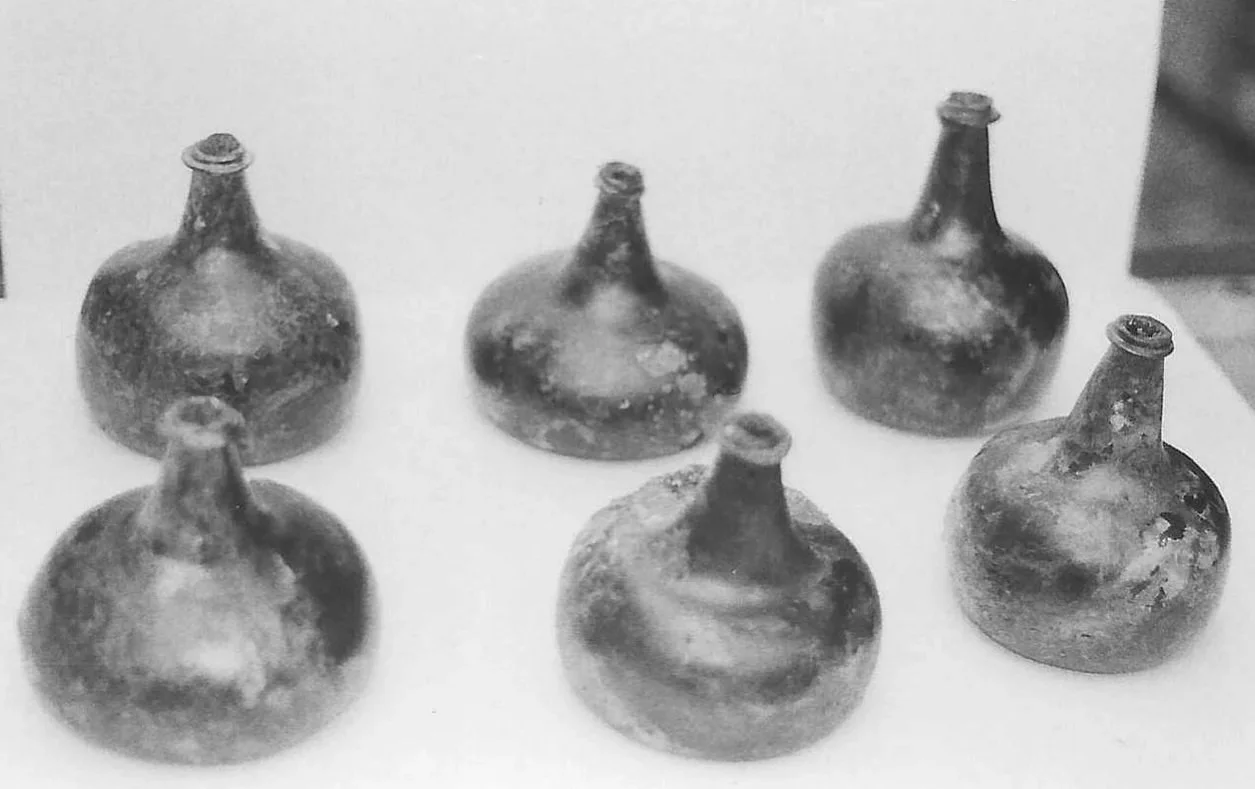
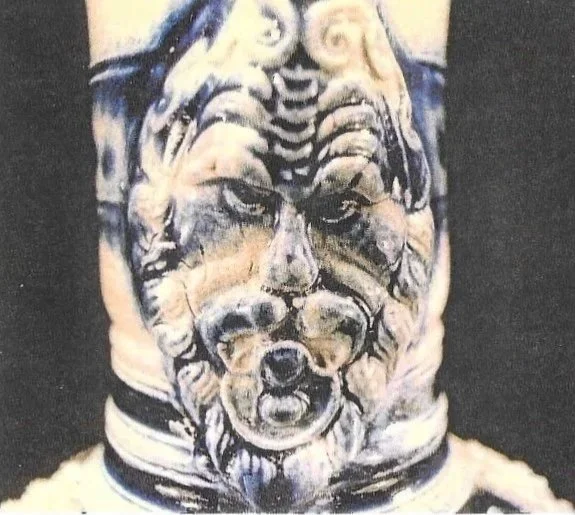
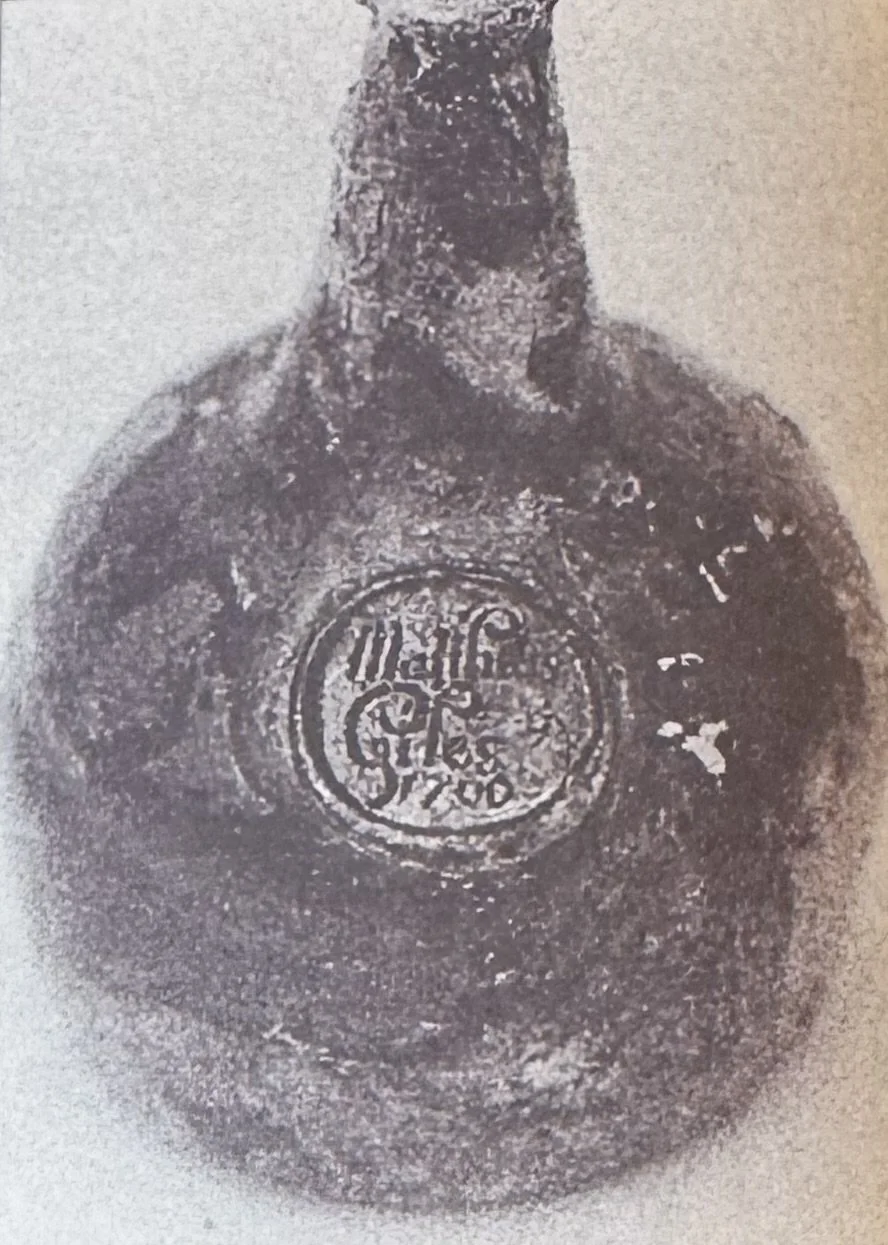
West Indian artifacts recovered indicate the vessel had been to that area, and also found were Rhenishware from the German Rhineland, and English rum bottles and clay pipes. Some of the items date from as early as 1670.
A deadeye that was recovered is charred on one side, leading the divers to believe the vessel probably went down by fire.
A metal detector found no armament, but did identify fragments of flintlocks and evidence of 80 mm leadshot, Demers said.
Demers said the ship “is probably a toss up” of between Portuguese or Dutch origin, but he leans toward the latter because a bottle that was recovered has been confirmed as being Dutch. Furthermore, he said, “we know the Dutch were trading along the coast in those years, before the English. The Portuguese were here too, but mostly for fishing, and we found no fishing weights among the ship itself.”
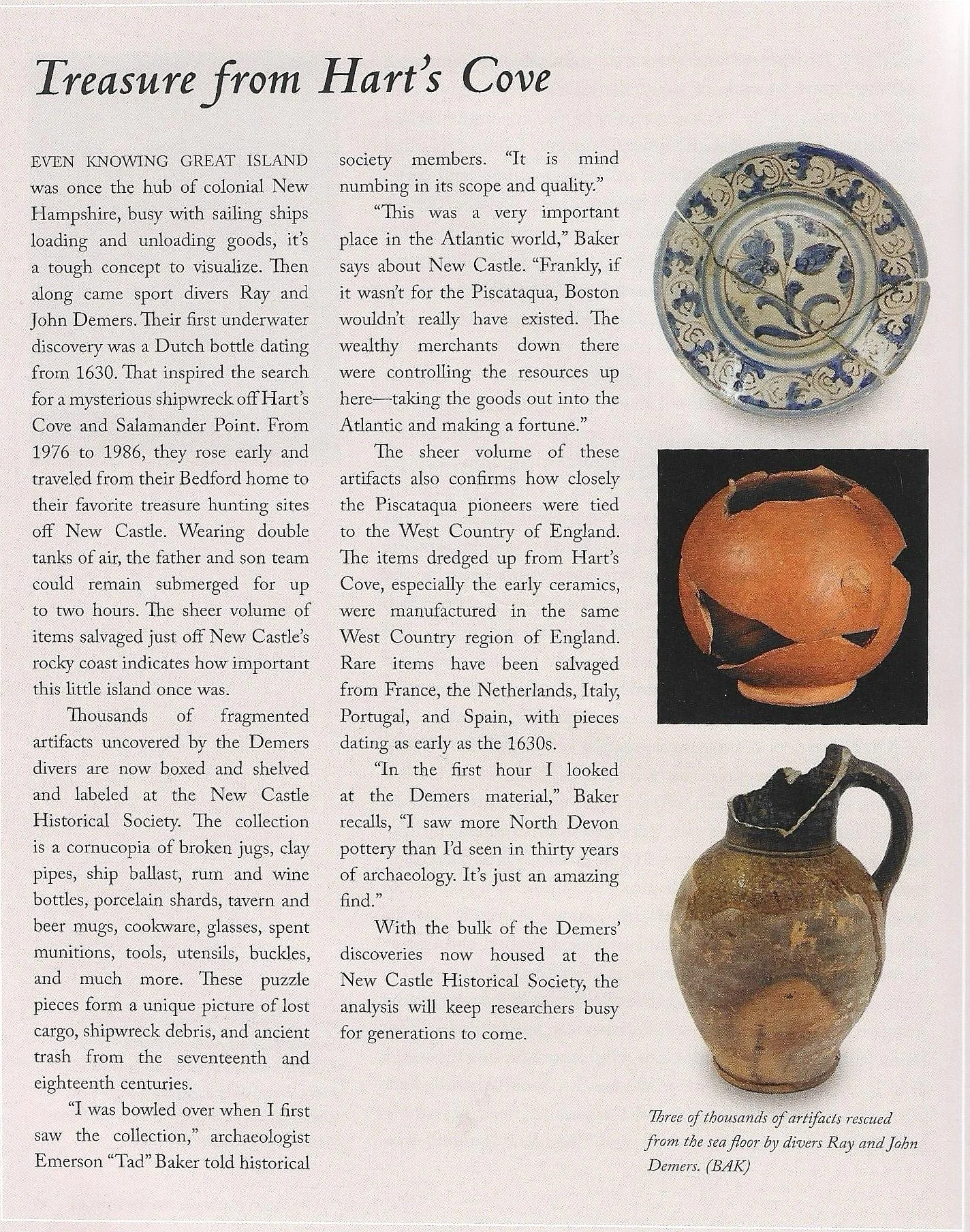
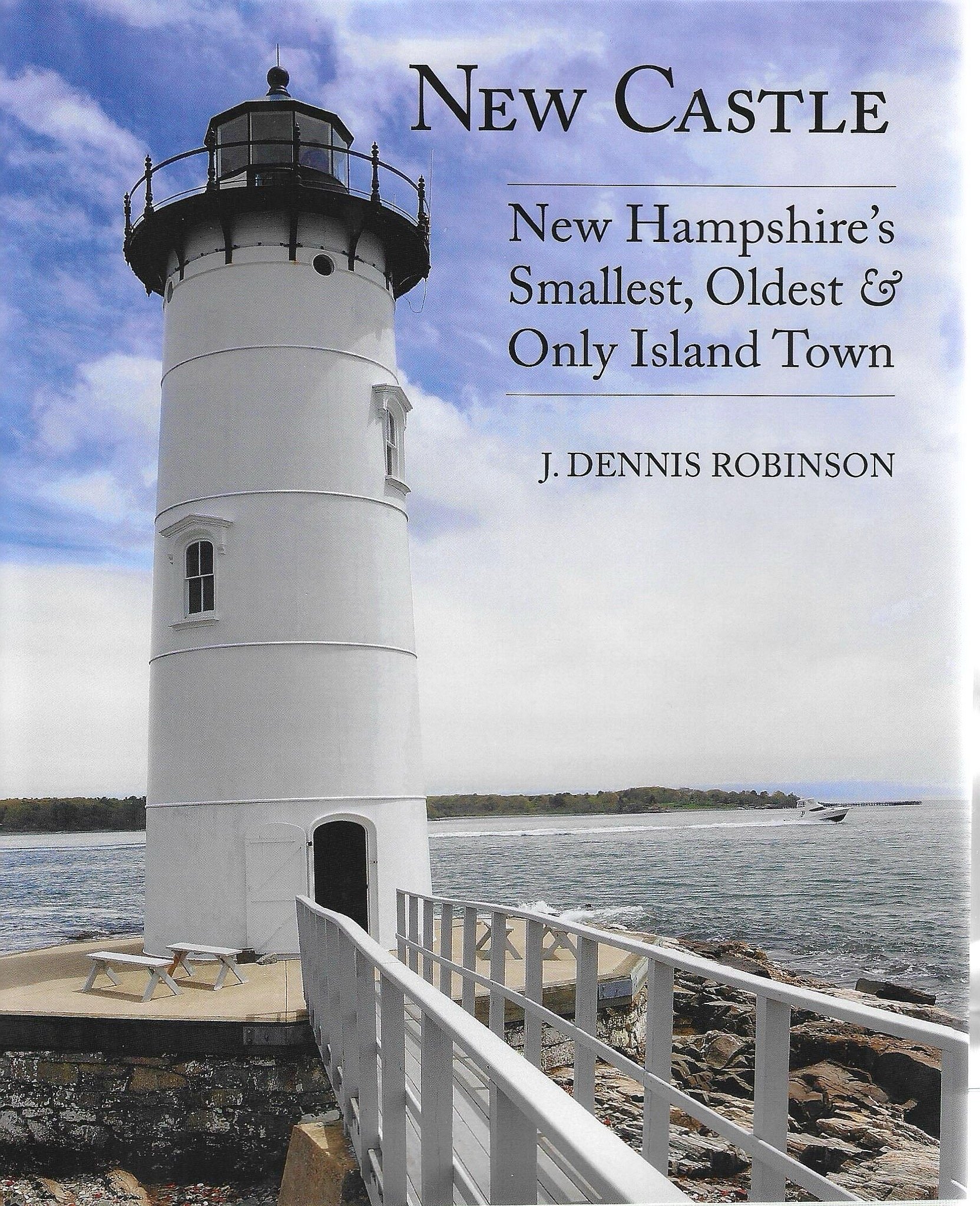
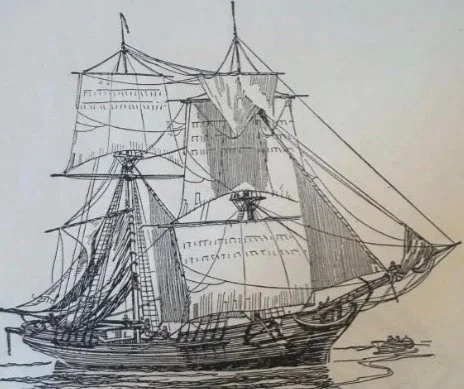
“The Manchester men are well known for their exploration of the New Hampshire coastal waters for ancient shipwrecks. Last fall they revealed that for the past six years they had been excavating a 250-year-old English merchant vessel from the waters of New Castle Harbor.”
“They made their current discovery early this spring when Demers resumed exploration of “The Pool,” an anchorage site used centuries ago behind the Islands.
Several years ago when looking for two other ships known to have gone down in the Pool, the “Astria” (a 20-gun Spanish ship captured and burned by the British) and the “Wonolancet” ( an American trade schooner), the divers had found an old, wooden stock anchor, sheared in half by its own weight from lying at a slant. ”
Demers said the excavation had the full support of the state Archeological Society, and that when it began in earnest he immediately contacted the curator of Colonial Williamsburg, VA. and advisor to the Smithsonian Institute, Ivor Noel Hume. He said Hume plans to go to England in the near future and check the origins of delftware from the wreck with a noted authority there, J.G Hurst of the English Dept. of Environment.
Demers said that so far he has been unable to trace the actual origin of the ship because few records were kept in the 17th century that survive today.
“ Its pretty hard to track down actual names. The most important thing is to find why such ships were there, but it takes time. Someday ill have it,hopefully,” Demers said.
In their years of exploration along the New Hampshire coast Demers has never sold anything theyve recovered. “Weve had some pretty fancy offers, but soon after we began this we decided archeological value is most important,” Demers said.
Presently their collection is kept in their homes in Manchester, but eventually they would like to see it go to the State of New Hampshire or the Smithsonian, Demers said.
Many of the artifacts recovered from the 1690 vessel, plus items recovered else-where along the coast, are on display through this month at St. Anselm’s College Library.